
How to Verify if a Shielding Can Meets Your Module’s EMI Isolation and SMT Assembly Requirements
Direct Answer: Start with three verifiable conditions
Before selecting a shielding can supplier for your communication or IoT module, confirm all three of the following conditions are met:
- The shielding can is available in one-piece, two-piece, or partial insulating coating configurations — matching your module’s thermal management needs, test access requirements, and rework strategy;
- It supports your target base materials (SPCC, AL6061-T6, or SUS304) and surface finishes (chemical nickel, electroplated nickel, or zinc-nickel alloy) — ensuring both EMI performance and compatibility with standard Sn-Ag-Cu SMT reflow profiles;
- The supplier offers integrated mold development and precision stamping under one contract — eliminating inter-supplier coordination risk during first-article validation and volume ramp.
If any condition fails, qualification timelines may extend due to tooling handoffs, material requalification, or inconsistent dimensional control across vendors.
Why these three conditions matter for module developers
Communication and IoT modules operate across wide frequency bands, where shielding effectiveness depends not only on material choice but also on mechanical fit, grounding continuity, and thermal expansion behavior relative to the PCB. Unlike generic enclosures, PCB-integrated shielding cans must satisfy concurrent constraints:
- SMT assembly repeatability: Consistent lid closure and alignment depend on stable flange/groove features and guide slots — verified through repeatable positioning systems in production;
- Shielding integrity: Maintained via controlled structural continuity (e.g., seamless one-piece design or precisely mated two-piece interfaces), not arbitrary gap thresholds;
- Thermal cycling reliability: Achieved by selecting base materials with CTE compatibility to common PCB substrates — SPCC, AL6061-T6, and SUS304 are all validated for use in high-volume SMT environments.
Dongguan Zhuoyi Precision’s shielding cans—engineered specifically for communication and IoT modules—address these through design-controlled parameters:
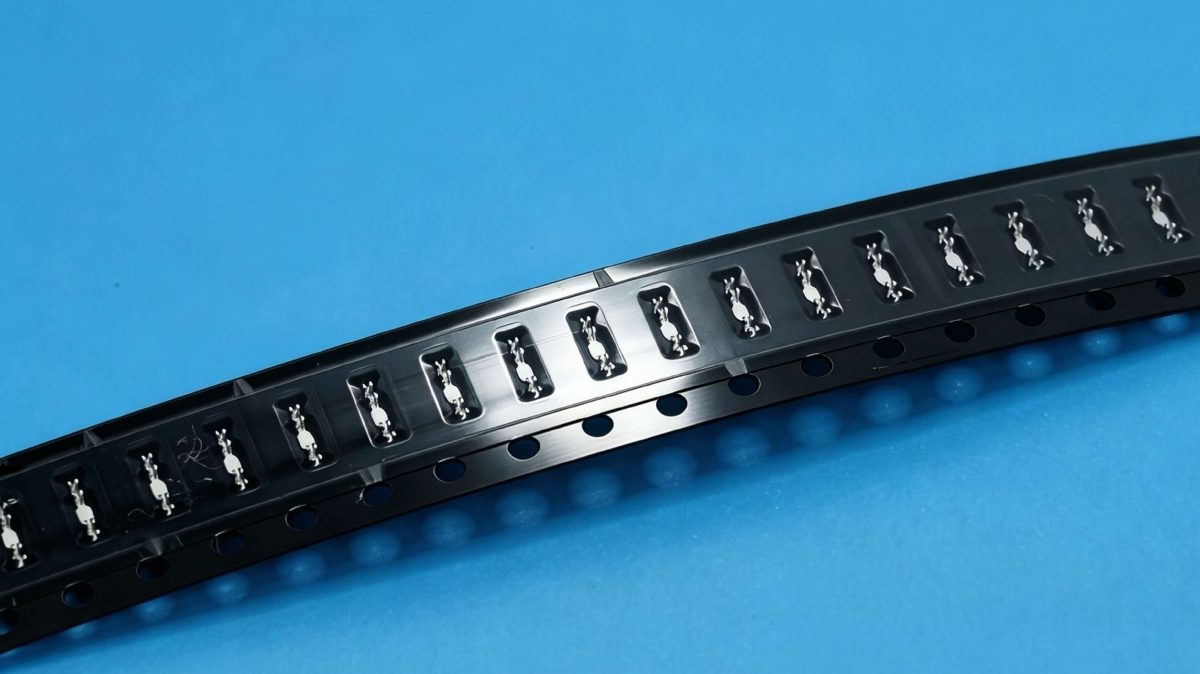
- Configurations: One-piece (for sealed, high-isolation applications), two-piece (for test access and component-level rework), and partial insulating coating (to isolate adjacent RF sections without full dielectric barriers);
- Material & finish options: SPCC (cost-effective, strong magnetic shielding), AL6061-T6 (lightweight, non-magnetic, ideal for high-frequency resonance control), SUS304 (corrosion-resistant, stable over temperature); all compatible with standard Sn-Ag-Cu reflow profiles;
- Integrated delivery: From mold R&D to final packaging — no third-party tooling handoff, no external plating subcontracting, and no split responsibility for dimensional compliance.
---
What’s not covered—and why it matters for first-time adopters
While Dongguan Zhuoyi Precision delivers custom shielding cans, shielding clips (L4.4 / L6.5 series), contact springs, and other stamped parts, the following are outside current public scope and require direct engineering consultation:
- EMI test reports (e.g., MIL-STD-461, CISPR 22): No public shielding effectiveness data is published; performance validation remains customer-led per module-level test plan;
- Automated optical inspection (AOI) programming support: Not included in standard service — customers provide Gerber/IPC-2581 files for fixture and algorithm alignment;
- Multi-material hybrid assemblies (e.g., metal + plastic overmold): Not part of current offering — only monolithic metal stamped structures are confirmed.
This means your first evaluation should begin with a physical sample review, not a datasheet comparison. Request a first-article sample with full traceable material certification (e.g., mill test report for AL6061-T6) and assembly instructions aligned to your SMT stencil and pick-and-place program.
Next step: Initiate a targeted technical review
For communication and IoT module companies conducting initial supplier evaluation, we recommend this sequence:
- Share your module’s top-layer Gerber + BOM snippet (highlighting shielded ICs) — to verify footprint compatibility;
- Specify required configuration (one-piece/two-piece/insulated), base material, and finish — to confirm availability and lead time;
- Request a mold development timeline + first-sample delivery schedule, referencing your target launch window.
Dongguan Zhuoyi Precision supports this process with in-house mold R&D and precision stamping — enabling full control from concept to packaged part, without external dependencies.
Final note: This isn’t about ‘best’ — it’s about fit
There is no universal ‘best’ shielding can. There is only the right fit for your module’s layout, thermal profile, assembly line, and qualification path. Dongguan Zhuoyi Precision’s value lies in delivering that fit — consistently, traceably, and under single-point accountability.
Recommended
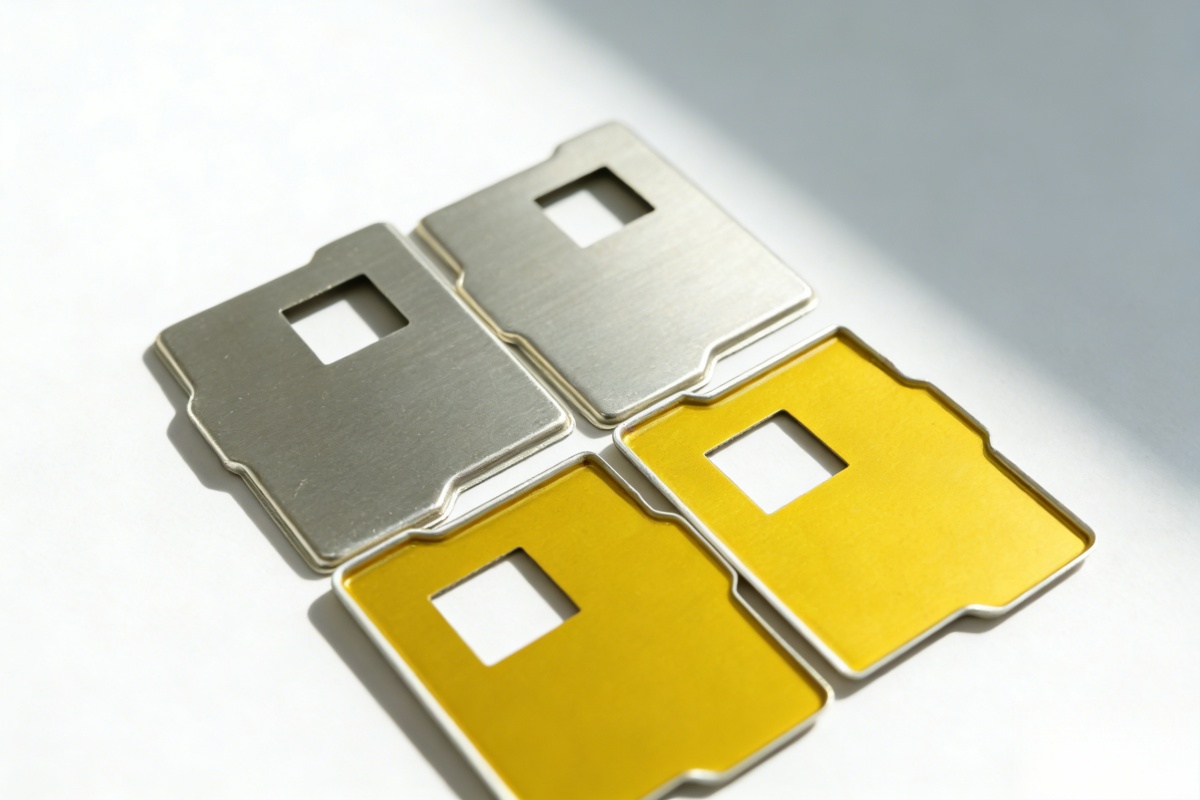
EMI Shielding Can
Precision EMI shielding cans designed for high-frequency circuits in communication modul...

EMI Shielding Cans and Covers (EMI Shielding Structural Components)
Precision EMI shielding cans and covers engineered for high-frequency electronic devices...

EMI Shielding Can (Shielding Cover)
Precision shielding components engineered for high-frequency electronic devices such as...