EMI Shielding Can (Shielding Cover)
Precision shielding components engineered for high-frequency electronic devices such as communication modules, IoT modules, and smart terminals—delivering reliable electromagnetic isolation and consistent mechanical fitment.
Highlights
- Drawing-driven customization supported; low MOQ of 500 pcs for prototyping
- Standard materials: C7701 nickel silver (excellent conductivity & solderability) and SUS304/SUS430 stainless steel (balanced performance and cost)
- Typical mold development cycle: 7–12 working days; first sample delivery ≤15 days
- Compliant with IPC-A-610 Class 3; critical dimension CPK ≥1.33
Specifications
- Common Thickness
- 0.15 mm – 0.30 mm (adjusted per structural strength and spring-back requirements)
- Tolerance Control
- ±0.03 mm (critical locating dimensions), ±0.05 mm (non-critical contours)
- Surface Finish
- As-rolled, nickel plating, tin plating, or insulating coating (optional)
- Operating Temperature Range
- -40°C to +125°C (continuous operation)
- Typical Materials
- C7701 nickel silver (high conductivity & solderability), SUS304 (high strength & corrosion resistance), SUS430 (magnetic compatibility)
EMI Shielding Can (Shielding Cover) is a critical EMI protection structural component in electronic devices, designed to block external electromagnetic interference (EMI) from entering sensitive circuit areas while suppressing outward radiation of internal high-frequency signals—ensuring signal integrity and operational stability of core components such as RF modules, processors, and sensors.
The EMI shielding cans provided by Zhuoyi Precision are manufactured using an integrated precision stamping process, supporting various structural configurations including one-piece (monolithic cover), two-piece (cover + bracket), and insulated coating options. They are compatible with mainstream package layouts such as QFN, LGA, and BGA, as well as SMT assembly processes. Parameters—including leg height, aperture position, grounding contact points, and bending angles—can be fully customized according to the customer’s PCB drawings, ensuring dimensional repeatability accuracy of ±0.05 mm and consistent batch delivery performance.
Typical application scenarios include:
• Communication modules: RF front-end isolation for 4G/5G modules and Wi-Fi/BT combo modules;
• IoT modules: Partitioned shielding of MCU and wireless ICs in NB-IoT, LoRa, and Cat.1 modules;
• Smart terminals: Localized EMI protection for mainboard RF sections in smartphones, tablet control boards, and TWS earphone main control areas;
• Industrial equipment: Applications with explicit EMC certification requirements, such as POS terminals, automotive T-Box units, and industrial HMI systems.

We provide end-to-end services—from structural feasibility assessment and material selection (e.g., CuNi2Si alloy C7701, stainless steel SUS304/430, Kovar alloy)—to concurrent mold development, small-batch prototyping, and mass production delivery. All EMI Shielding Cans undergo pre-shipment verification including conductivity resistance testing, coordinate measuring machine (CMM) dimensional sampling, and reliability validation via salt spray and vibration tests, meeting baseline EMC requirements per IEC 61000-4 series standards.
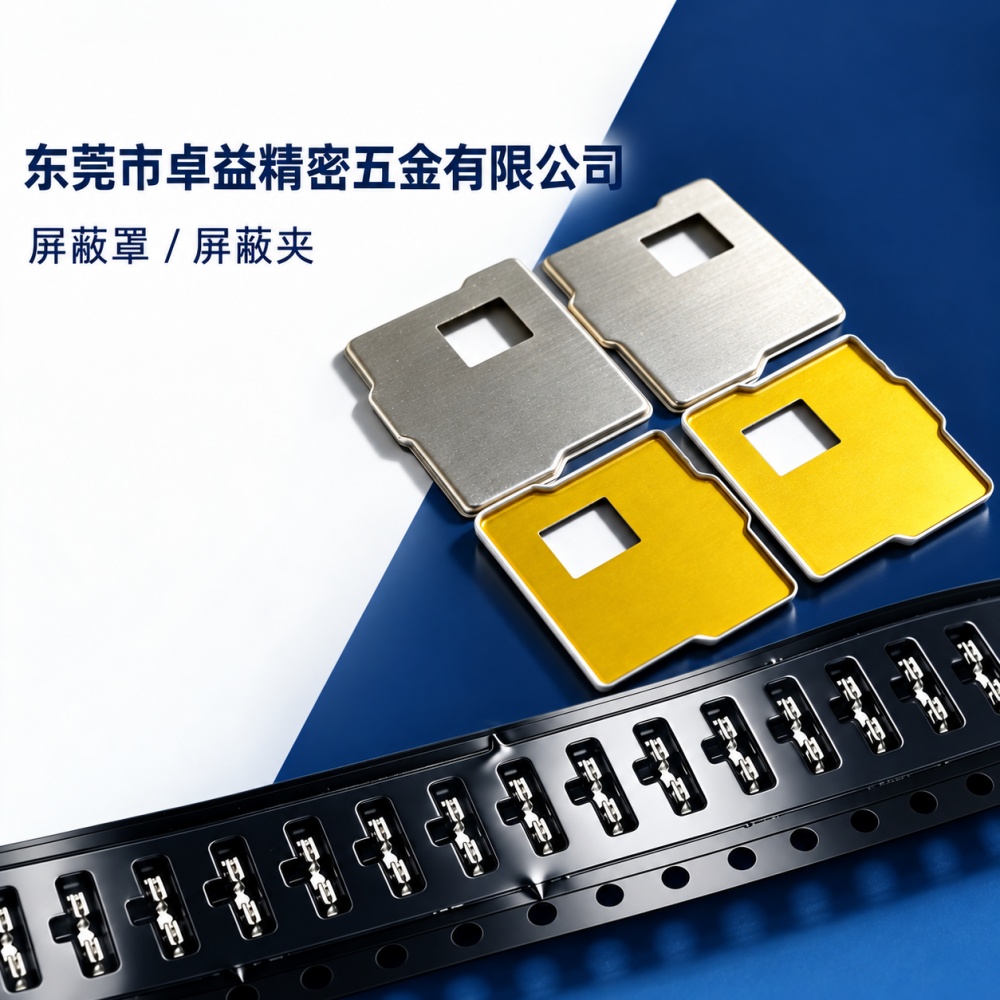
To address diverse application needs, we offer the following typical structural options:
- Standard dome-shaped shielding can: Designed for general-purpose SMT placement; legs may be either movable or integrally stamped with the can body, enabling vacuum nozzle handling;
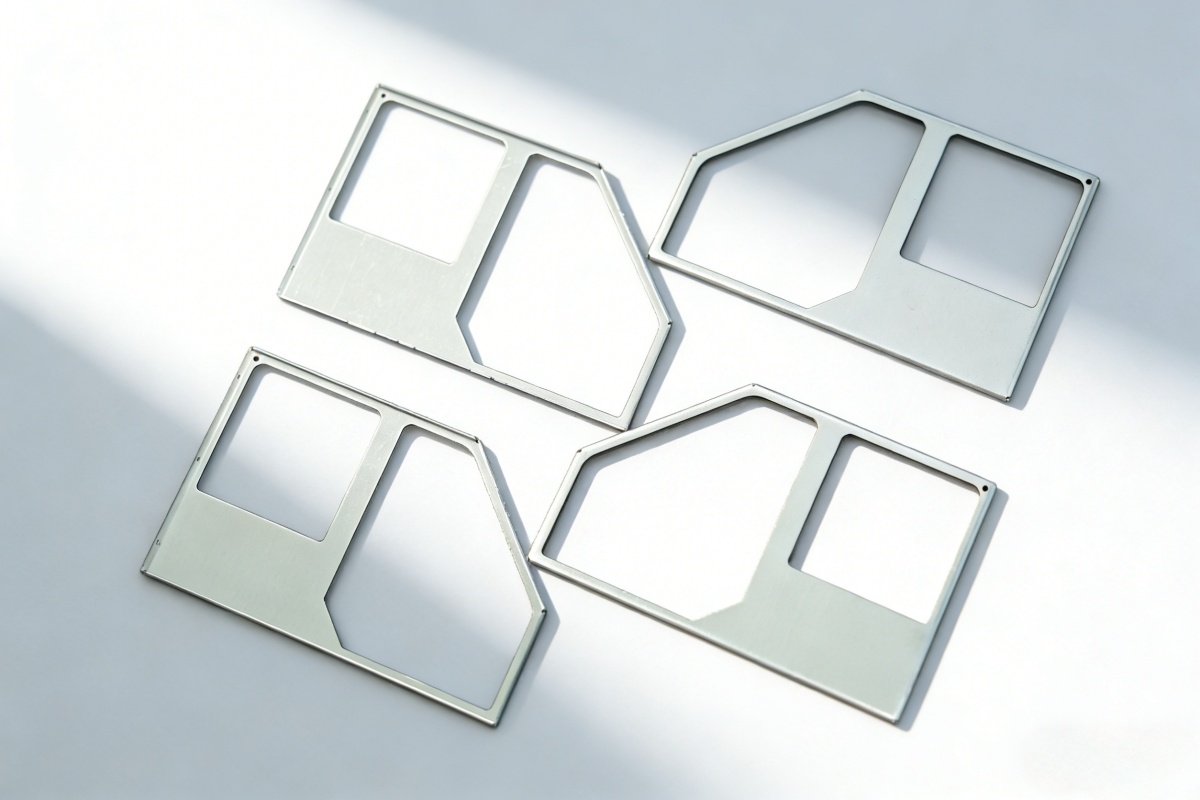
Multi-cavity segmented shielding cover
: Divides a single cover into 2–4 independent shielding cavities to enable collaborative isolation of multiple ICs;
Insulated Coating EMI Shielding Can
: High-temperature-resistant insulating coating (e.g., polyimide PI) is applied to the inner surface to prevent short circuits and enhance high-frequency attenuation performance;
Removable shielding clip-and-cover structure
: Used in conjunction with shielding clips to facilitate post-production repair and functional debugging.